
Scrap grades
Scrap batteries
Lead-acid off cars, vans, plant and standby sets. Heavy, worth money, and usually the thing that has been in the corner of the garage the longest.
A lead-acid battery is mostly lead, which is why it weighs what it weighs and why it is worth collecting rather than binning. A typical car battery is somewhere around 15–20kg, and the great majority of that is metal.
They are also the single most common thing we get asked about that people assume is worthless. It is not.
What we take
- Starter batteries — cars, vans, lorries, tractors, bikes
- Leisure and marine — caravans, motorhomes, boats
- Traction — forklifts, floor scrubbers, milk floats, mobility scooters. These are the heavy ones; a forklift cell can be a two-man lift on its own.
- Standby and UPS — alarm panels, server rooms, emergency lighting, telecoms cabinets. Usually sealed, usually in racks, usually a lot of them at once.
- Plant and generator — standby sets, welders, site equipment
One or a pallet
One out of a garage is fine, and it will usually get folded into whatever else you are having taken. Where it gets more interesting is volume: garages, plant hire, fleet workshops and alarm engineers all accumulate these steadily, and a pallet of them is worth a proper collection rather than a trip to the tip. That is a trade collection.
Two practical things
Keep them upright. Not a formality — a battery on its side leaks acid, and acid finds the boot carpet, the shelf it was sitting on, or the back of your van. Upright, on something you do not mind, and they are entirely undramatic.
Tell us if any are cracked or bulging. Not a problem, just something we would rather know before we pick it up than after. Same with a pallet that has been rained on for two years and is now one object.
Lithium as well — but tell us what it is
We take lithium as well as lead-acid. It is a different animal, though, and we would rather know what is coming than turn up to a surprise. EV and hybrid packs, home storage batteries, e-bike and scooter packs, tool batteries and the big power-tool boxes are all lithium.
The short version is that damaged lithium cells are a fire risk in a way lead-acid simply is not, and they travel differently as a result. Ring or send a photo, tell us what it came out of and what state it is in, and we will tell you how it needs handling before we come for it.
The answer is yes to both. But a yard that says “yes, anything” without asking what it is has not understood the question.
How it works
Three steps. No site visit.
Send a photo
WhatsApp a picture of whatever needs shifting. No need to tidy it first or guess the weight.
Get a price
A straight number back, usually the same day. The real price for your actual load.
It’s gone
We turn up, load it, sweep up, and you get the paperwork showing where it went.
The money bit
What actually decides what we pay
Nobody likes “it depends”. Here is what it actually depends on, so you can work out roughly where you stand before you ring anyone.
01
What it weighs
The base of it. Weighed on scales you can read, in front of you — not estimated in a back office and written on a docket afterwards.
02
What grade it is
The widest variable by a distance. Bright copper and burnt copper are the same metal and nowhere near the same price. Light iron, heavy scrap and non-ferrous are three different numbers, and keeping them apart is what moves yours.
03
How clean it is
Everything attached that is not the metal comes off the weight that counts — motors in a pile of steel, plastic housings, timber, the foam bonded to a modern cylinder. You do not have to strip it. It just prices as what it is.
04
Whether we collect it
Bringing it in yourself is worth more than having it collected, because collection is a vehicle and a driver. On a decent load the difference is real; on a boot full of oddments it is not worth the fuel.
Why there’s no price list on this page
Because scrap prices move with the metal markets, and they move weekly. Any figure printed here would be out of date before most people read it, and a website quoting last month’s rate is not being transparent — it is being wrong in a direction that never seems to disadvantage whoever published it.
Send a photo of what you have got and you will get today’s number for your actual load. Payment is by bank transfer, because paying cash for scrap has been illegal in this country since 2013 — anyone offering you notes is telling you something about how the rest of their business runs.
More scrap metal
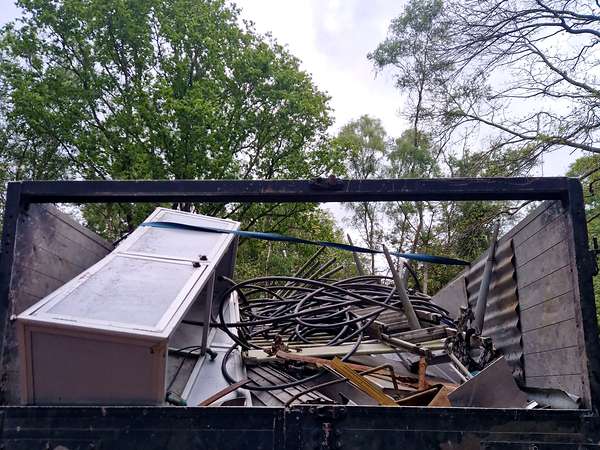
Light iron
Radiators, appliances, bed frames, gates, mixed steel. The everyday grade.
See more →Heavy scrap & shearing
Plate, beam, rail and axles. Anything that has to be cut before it can move.
See more →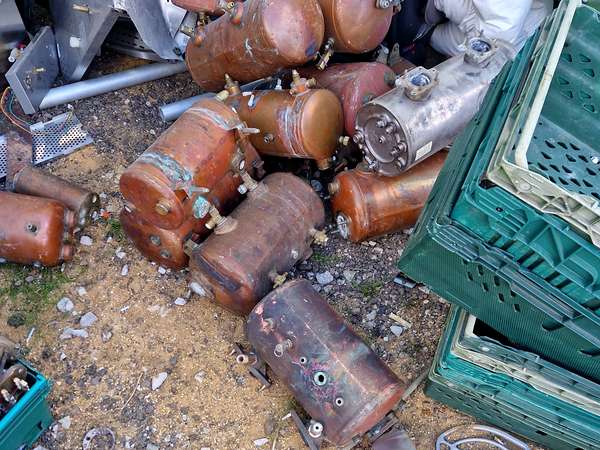
Non-ferrous
Copper, brass, lead, aluminium. Sorted properly, because that is what makes it pay.
See more →FAQ
Straight answers
Do you take lithium batteries?
Ring us first. EV and hybrid packs, home storage, e-bike and tool batteries are all lithium, and damaged cells are a fire risk in a way lead-acid simply is not. You will get a straight answer about whether it is us or somebody else.
How should I store them until collection?
Upright, on something you do not mind. A battery on its side leaks acid, and acid finds the boot carpet or the shelf it was sitting on. Otherwise they are entirely undramatic.
Do you take just one?
Yes, though one on its own usually gets folded into whatever else you are having taken. A pallet of them is worth a collection of its own.
What areas do you cover?
Wymondham and everywhere down the A11 and A47 — Norwich, Attleborough, Thetford, Diss, Long Stratton and across into Suffolk to Beccles and Bungay. If you are not sure, just ask.
Is it all done legally?
Yes. We are an upper-tier registered waste carrier and a licensed scrap metal dealer with both councils, and every load comes with a waste transfer note. Ask for our registration number when you ring and we will give it to you, so you can check it against our name on the public register.
How quickly can you come?
Often the same week, sometimes the same day if we are passing. Tell us where you are and you will get the honest answer rather than the one that gets us the booking.