Guide
Fly-tipped on your land? The bill is yours
The council will clear it off the verge. Six feet through your gateway, it is your problem and your money — which is the part nobody who dumps it has ever had to think about.
Everyone knows fly-tipping is illegal. Rather fewer people know who ends up paying to clear it, and that is the fact that changes how the whole thing looks.
The line that decides everything
If waste is dumped on public land — a road, a verge, a council car park — the council clears it. It comes out of council tax, so everyone in the district pays a little.
If it is dumped on private land, it is the occupier’s responsibility to clear it, and the occupier’s money. Not the council’s. Not the tipper’s, because the tipper has gone.
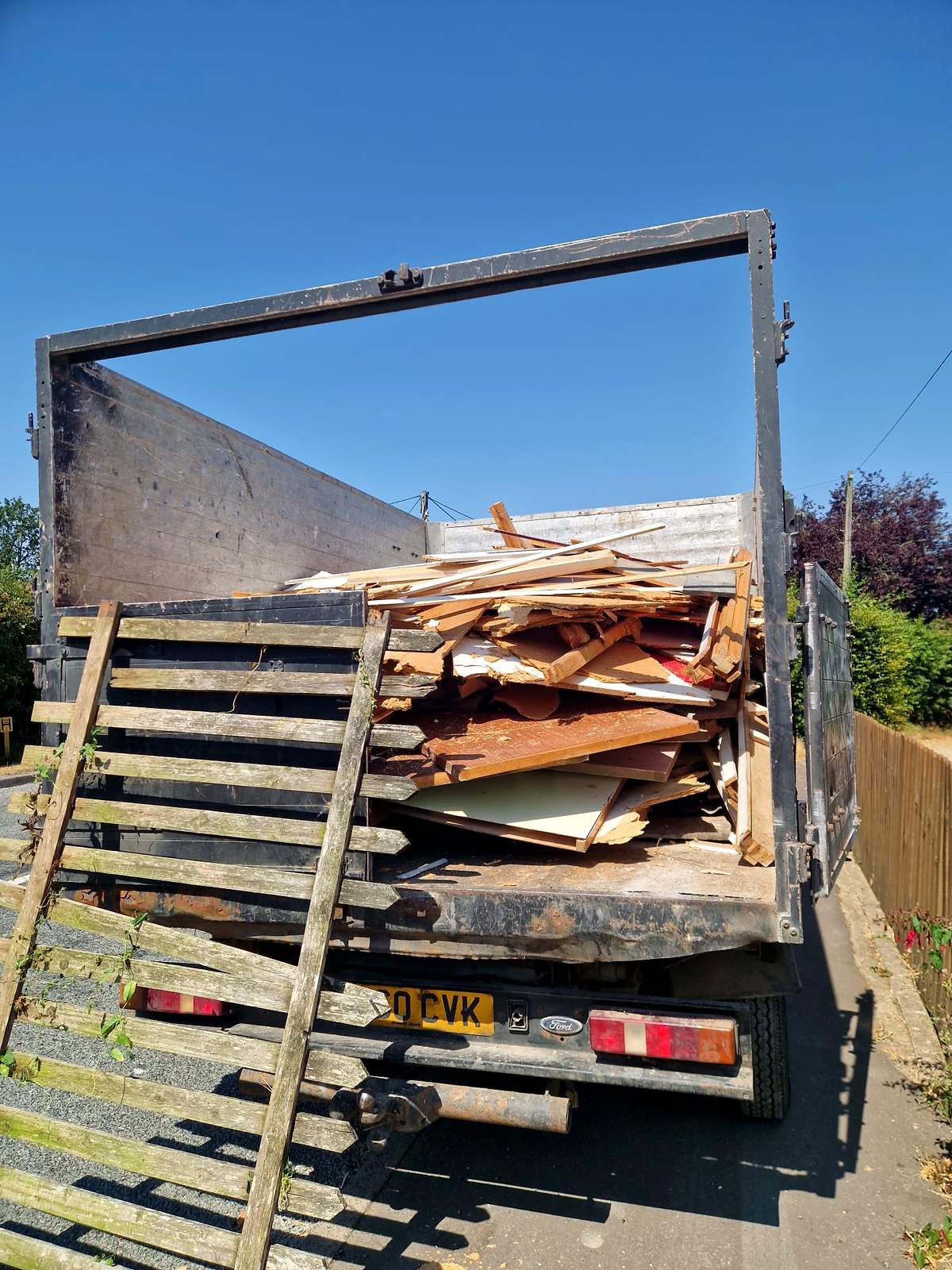
That line is usually a gate, a hedge, or the end of a farm track. A trailer-load tipped in a gateway at two in the morning is, in law, now the farmer’s waste to dispose of legally and at his own cost. He did not order it, he did not want it, and he will pay a licensed carrier to take it away exactly as if he had generated it himself.
What that costs, in practice
A few bin bags is a nuisance. The ones that hurt are:
- A full transit-load of building waste in a field entrance — several hundred pounds to clear, and the gateway unusable until it is gone.
- Anything containing asbestos. Old garage roofs and corrugated sheet turn up constantly, and the moment asbestos is in the pile the clearance is a specialist job with a specialist price.
- Tyres. Difficult and expensive to dispose of legally, which is precisely why they get dumped.
- Anything in a watercourse or a ditch, which stops being a clearance job and becomes a pollution one.
And the secondary costs land on people who never see the pile: livestock that get into tipped material, a blocked field entrance during harvest, a lane that a tractor cannot get down.
What happens to the person who dumped it
Considerably more than most people assume, when they are caught.
Fly-tipping under the Environmental Protection Act carries an unlimited fine and up to five years’ imprisonment for the most serious cases. Councils can issue fixed penalties of up to £1,000 on the spot for smaller incidents, and they have powers to seize and crush the vehicle used to do it.
Being caught is not as unlikely as it looks at two in the morning either. Most loads contain something with a name and address in it, because most fly-tipped waste is household waste, and most household waste has post in it somewhere.
The uncomfortable bit
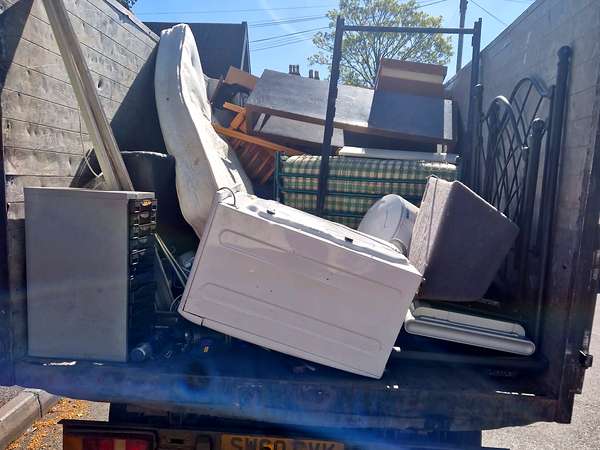
Well over a million fly-tipping incidents are recorded in England every year, and the largest single category is household waste — not builders, not businesses. Sofas, mattresses, fridges, bagged rubbish.
Most of that did not get there because a householder drove it to a lay-by. It got there because a householder paid somebody forty or fifty pounds cash to take it away, asked nothing, and got a very good price for a reason.
That is the actual mechanism, and it is why the cheap quote is so often the expensive one. The person who took the money committed the offence. But the householder had a legal duty to check the carrier was registered, and if the waste is traced back — which it frequently is — they can be fined too, for a job they thought they had paid to have done properly.
If it has happened to you
- Report it anyway, even on private land. Councils log incidents and patterns are how repeat tippers get caught, even where the clearance is not theirs to do.
- Photograph it before you touch it, including anything with an address on it. Do not go rummaging through it — just record what is visible.
- Do not burn it. A very common instinct with a pile in a field, and it turns your clearance problem into your offence.
- Get it cleared by somebody registered, and keep the transfer note. Having been the victim of fly-tipping is not a defence if the clearance is then also done badly.
We clear fly-tipped waste from private land across South Norfolk regularly, and it is the one job where we are conscious the customer is not the person who created the problem. Send a photo of what has been left and you will get a straight price for making it somebody else’s problem — legally, this time.
More guides
Worth knowing too
Garden clearance: the half of it that is underground
Most garden clearance quotes cover cutting and carting. What decides whether the garden is actually usable afterwards is what comes out of the ground…
Read →
What a waste transfer note is, and why you want one
The waste transfer note is the document that proves you handed your waste to someone licensed. Here is what it has to say, and…
Read →
Who can actually issue a certificate of destruction?
Only an authorised treatment facility can issue a certificate of destruction. A scrap metal dealer licence is a different thing — here is how…
Read →Recent jobs