
Scrap grades
Heavy scrap & shearing
Plate, beam, rail, axles and machinery. If it is too thick to cut with a grinder or too heavy to lift into a tipper, it is a shearing job rather than a scrap run.
Heavy scrap is thick steel — the stuff with real section to it. It is a better grade than light iron because there is more steel per cubic foot and less of everything else, but it is harder to move, and that is the whole character of the job.
What we mean by heavy
- Plate, RSJs, beams, columns, channel and angle
- Rail — track, chairs, fishplates, sleeper hardware
- Axles, hubs, half-shafts, gearbox and engine casings
- Agricultural machinery, implements, ploughs, harrow frames
- Industrial plant, presses, press tools, machine beds, large gearboxes
- Boiler shells, pressure vessels, heavy tank and pipework
Shearing, and why it matters to you
Shearing is cutting heavy steel down with a hydraulic shear — effectively a very large guillotine — rather than with a torch or a saw. It is how thick material gets reduced to a size that can be handled, loaded and melted.
The reason it appears on a page aimed at customers rather than in a yard manual is that it decides how your job runs. A beam that has to be sheared is not something anyone is dragging onto a tipper by hand. Depending on what it is and where it is, that means cutting it down on site before it moves, or bringing lifting gear, or both.
So the useful thing you can tell us up front is not the weight. It is:
- Roughly how big the biggest single piece is
- Whether a vehicle can get to it, or whether it has to be dragged first
- What the ground is — concrete, hardstanding, or a field in February
- Whether anything is still bolted or built into something else
A photo with something in it for scale answers most of that in one go.
Rail, and where things came from
We ask where rail and heavy track material came from. Not as an accusation — there is a lot of it in private hands perfectly legitimately, on farms, in old sidings, on industrial sites, and as garden edging where somebody in 1974 had an idea.
We ask because the yards that do not ask are the ones that end up in the local paper, and because a dealer who is casual about provenance on rail is being casual about it on everything else too. It takes ten seconds and it protects both of us.
Getting a price
Heavy scrap is priced on weight and grade like everything else, but access changes the job more than it does anywhere else on this site. Send photos — the pile, and the way in to it — and we will tell you what it is worth and how we would go about getting it out.
How it works
Three steps. No site visit.
Send a photo
WhatsApp a picture of whatever needs shifting. No need to tidy it first or guess the weight.
Get a price
A straight number back, usually the same day. The real price for your actual load.
It’s gone
We turn up, load it, sweep up, and you get the paperwork showing where it went.
The money bit
What actually decides what we pay
Nobody likes “it depends”. Here is what it actually depends on, so you can work out roughly where you stand before you ring anyone.
01
What it weighs
The base of it. Weighed on scales you can read, in front of you — not estimated in a back office and written on a docket afterwards.
02
What grade it is
The widest variable by a distance. Bright copper and burnt copper are the same metal and nowhere near the same price. Light iron, heavy scrap and non-ferrous are three different numbers, and keeping them apart is what moves yours.
03
How clean it is
Everything attached that is not the metal comes off the weight that counts — motors in a pile of steel, plastic housings, timber, the foam bonded to a modern cylinder. You do not have to strip it. It just prices as what it is.
04
Whether we collect it
Bringing it in yourself is worth more than having it collected, because collection is a vehicle and a driver. On a decent load the difference is real; on a boot full of oddments it is not worth the fuel.
Why there’s no price list on this page
Because scrap prices move with the metal markets, and they move weekly. Any figure printed here would be out of date before most people read it, and a website quoting last month’s rate is not being transparent — it is being wrong in a direction that never seems to disadvantage whoever published it.
Send a photo of what you have got and you will get today’s number for your actual load. Payment is by bank transfer, because paying cash for scrap has been illegal in this country since 2013 — anyone offering you notes is telling you something about how the rest of their business runs.
More scrap metal
Light iron
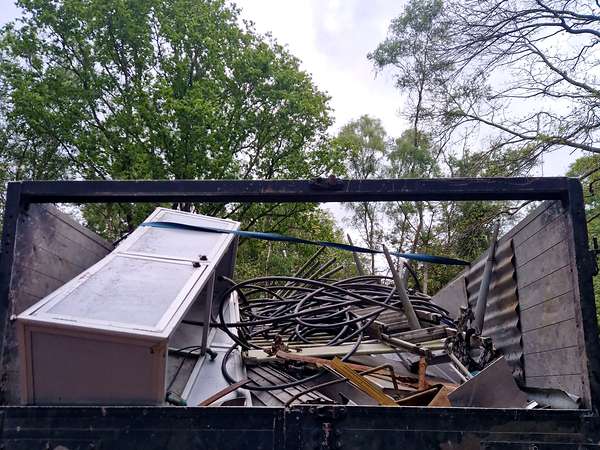
Radiators, appliances, bed frames, gates, mixed steel. The everyday grade.
See more →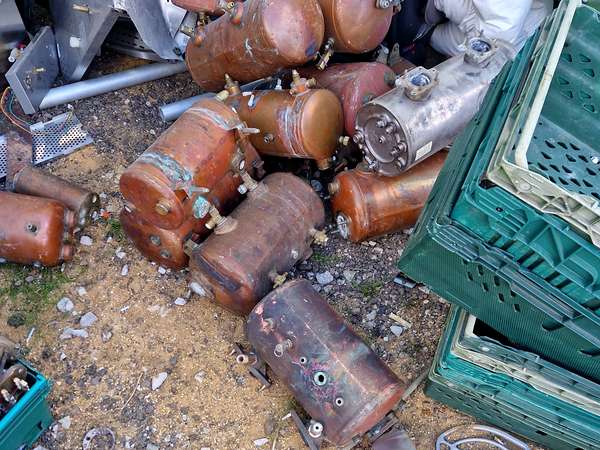
Non-ferrous
Copper, brass, lead, aluminium. Sorted properly, because that is what makes it pay.
See more →Batteries
Lead-acid off cars, vans, plant and standby sets. Collected loose or by the pallet.
See more →FAQ
Straight answers
What if it is too big to move?
That is normal for heavy scrap and it is what shearing is for. Depending on what it is and where it is, it gets cut down on site before it moves, or lifted, or both. Tell us the size of the biggest single piece rather than guessing the weight.
Do you take rail and track material?
Yes, and we will ask where it came from. There is a lot of it in private hands perfectly legitimately. We ask because the yards that do not ask are the ones that end up in the local paper.
Does it matter where it is standing?
More than anywhere else on this site. Concrete and hardstanding is straightforward; a field in February is not. A photo of the way in to it is more useful than a photo of the pile.
What areas do you cover?
Wymondham and everywhere down the A11 and A47 — Norwich, Attleborough, Thetford, Diss, Long Stratton and across into Suffolk to Beccles and Bungay. If you are not sure, just ask.
Is it all done legally?
Yes. We are an upper-tier registered waste carrier and a licensed scrap metal dealer with both councils, and every load comes with a waste transfer note. Ask for our registration number when you ring and we will give it to you, so you can check it against our name on the public register.
How quickly can you come?
Often the same week, sometimes the same day if we are passing. Tell us where you are and you will get the honest answer rather than the one that gets us the booking.