Guide
Garden clearance: the half of it that is underground
Cutting it all down takes a day. Getting the roots, the stumps and thirty years of buried concrete out is the job you are actually trying to buy.
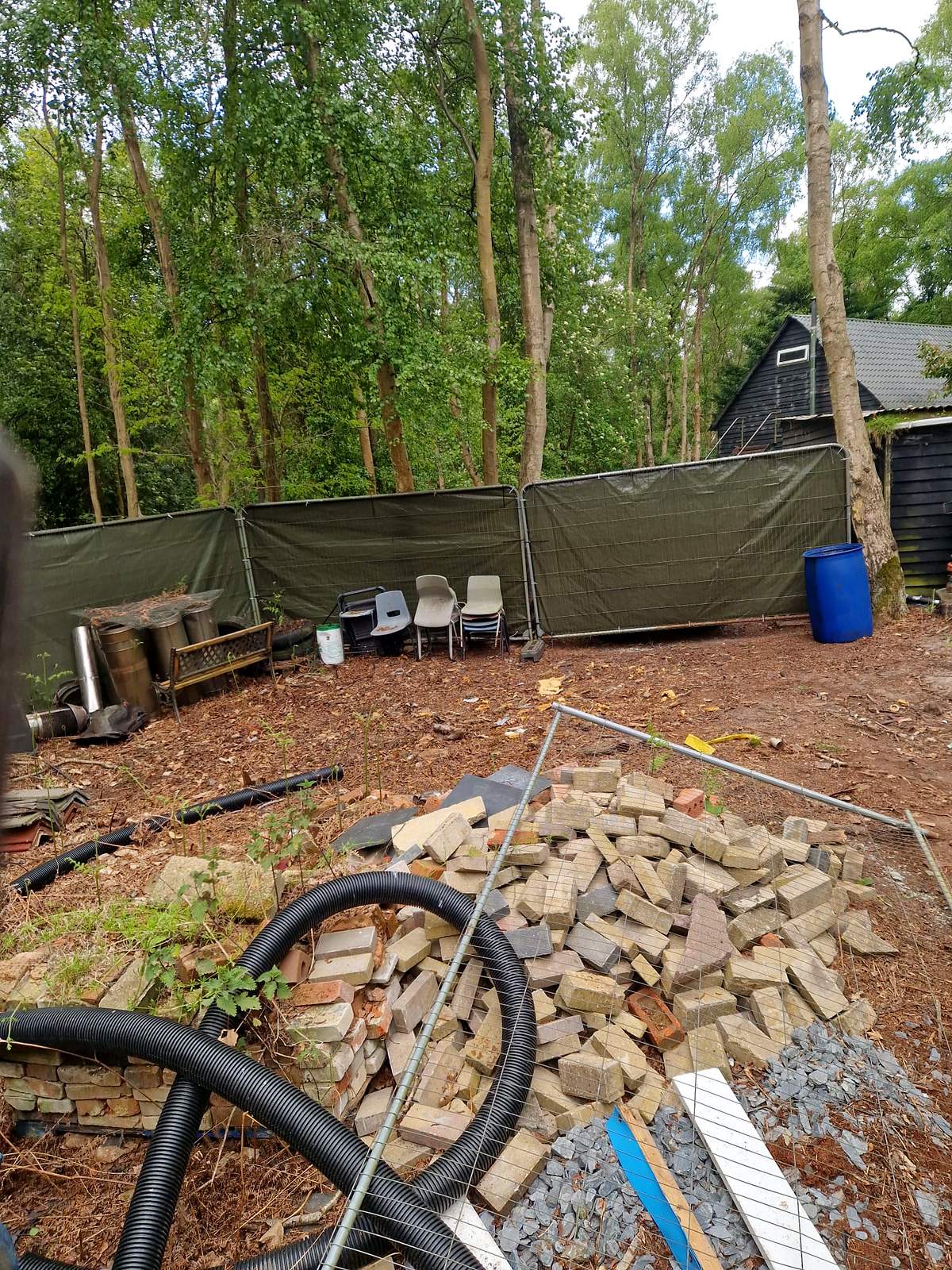
There are two completely different jobs sold under the same two words.
The first is cutting everything down and taking it away. At the end of it the garden looks transformed, there is a photograph you would put on a website, and the price was very reasonable.
The second is that, plus getting out what is underneath. It costs more, it takes longer, and it is the one that actually leaves you with a garden you can do something with.
The difference does not show up on the day. It shows up in April.
What is normally under an overgrown garden
- Bramble and ivy root. Cut bramble to the ground and it comes back thicker, because you have pruned it. The crown has to come out.
- Stumps. Leylandii, laurel, buddleia, elder, self-set sycamore. Buddleia and elder in particular will regrow from almost nothing.
- Concrete. The base of a shed that went twenty years ago. Fence posts set in a bucket of it each. Old washing line anchors, rotary drier sockets, path foundations, a step to a door that no longer exists.
- Buried hardcore and rubble. Extremely common in gardens of any age — whatever was left over from an extension went in a hole rather than in a skip.
- Sleepers, edging and old raised beds, usually held together by the soil rather than the other way round.
- Weed membrane and gravel, laid at some point, now six inches down with roots through it.
- Wire. Old fence wire, chicken netting and rabbit wire grown into hedge bottoms and tree trunks, which is the thing most likely to stop a job dead if nobody looked first.
Why it matters, specifically
It is not tidiness. Each of these blocks a particular next step:
- Turf will not take over buried rubble and membrane. It will look fine for one season and then go patchy and yellow in the dry spots, because there is four inches of soil over hardcore.
- A patio or a base will sink unevenly if it is laid over backfilled holes and old stump voids. That is not a next-year problem, it is a three-years-later one, and by then it is your fault.
- A fence cannot go in where the old concrete is still in the ground, which is exactly where the new post needs to be.
- Brambles come back. Reliably, and roughly twice as vigorously, because they have had a year with no competition and a lot of light.
What we actually do
We dig it out. Roots, crowns, stumps, concrete, buried rubble — out of the ground, into the truck, and away, so what is left is ground rather than a lid on the last thirty years.
Where it makes sense we will say so if the digging is not worth it. If you want a wildflower patch and not a lawn, half of the above genuinely does not matter, and you should not pay for stump grinding to grow cow parsley. The point is that it should be a decision, not something quietly left out of a quote.
The honest bit about pricing
Nobody can see through soil.
What is above ground can be priced from a photograph. What is under it is a reasonable guess until the first spade goes in, and occasionally that guess is wrong in an expensive direction — a shed base turns out to be eight inches of reinforced concrete rather than two of slab.
So we price the clearance properly, tell you what we expect to find underneath, and tell you before we carry on if it turns out to be materially different. What we will not do is quote low on the visible half and discover the rest of it on the day, which is the standard way this job goes wrong for people.
One thing to check before anyone starts
Japanese knotweed. Bamboo-like hollow stems, leaves in a zigzag along the stem, dense stands that come up through anything.
We do not treat knotweed and neither should anybody else with a digger and a trailer — it is a specialist treatment job, it has to be disposed of as controlled waste, and it has real consequences for selling or mortgaging the property. The genuine danger is a well-meaning clearance chopping it up and dragging it across the rest of the garden, which turns one stand into six.
If you think you have got it, photograph it and send it before anyone touches the garden. If it is knotweed we will tell you, and tell you who to ring. If it is bindweed or Russian vine, which it usually is, we will tell you that too and get on with it.
More guides
Worth knowing too
Fly-tipped on your land? The bill is yours
Fly-tipping on private land is cleared at the landowner’s expense, not the council’s. Here is why, what it costs, and what actually happens to…
Read →
What a waste transfer note is, and why you want one
The waste transfer note is the document that proves you handed your waste to someone licensed. Here is what it has to say, and…
Read →
Who can actually issue a certificate of destruction?
Only an authorised treatment facility can issue a certificate of destruction. A scrap metal dealer licence is a different thing — here is how…
Read →Recent jobs